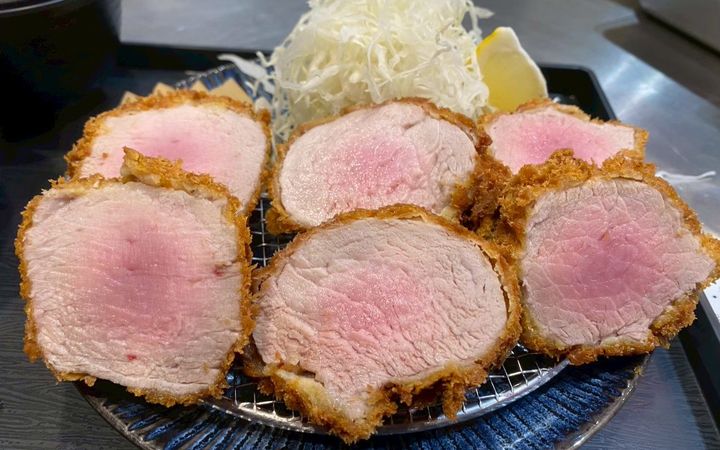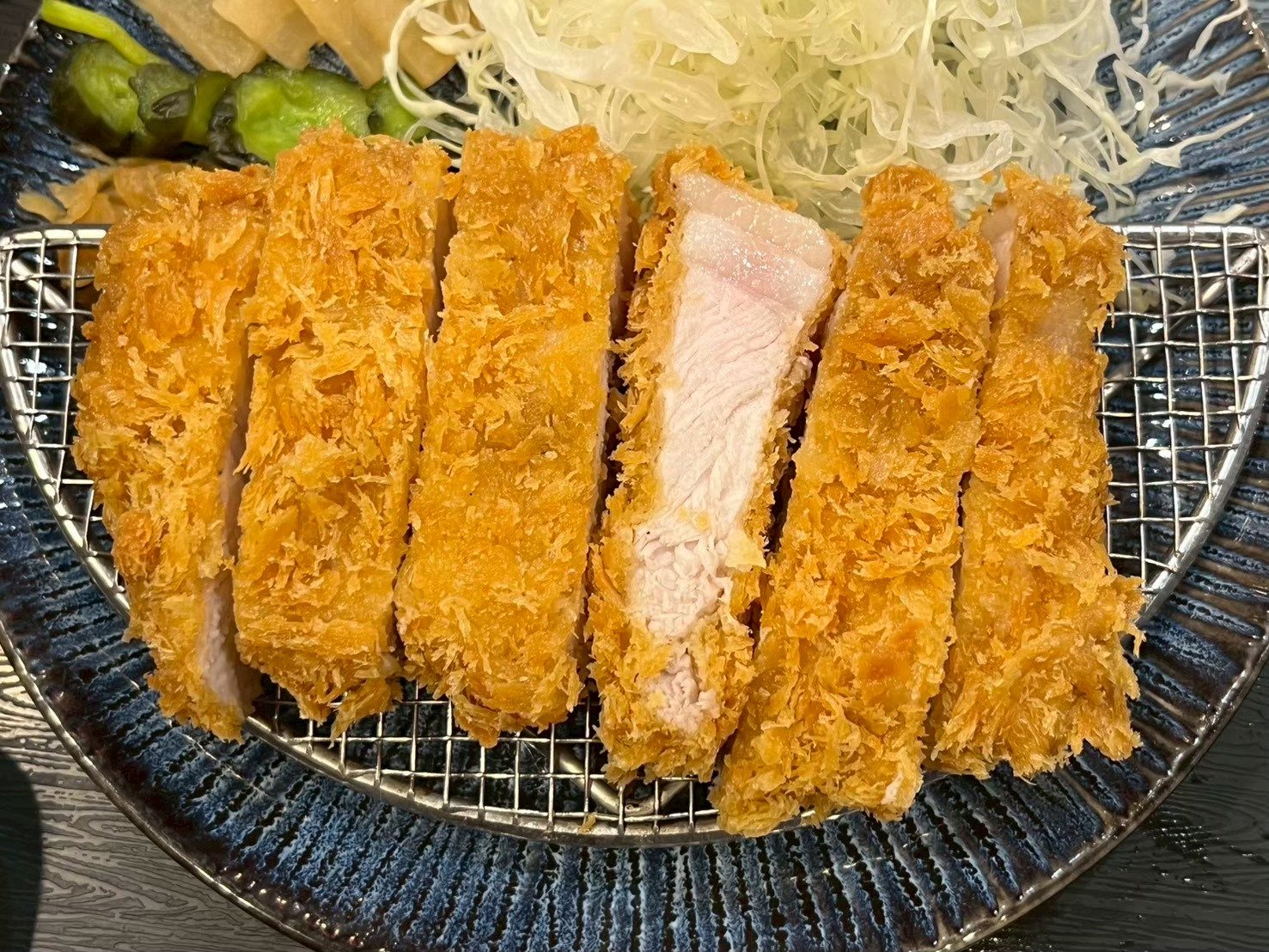
Around 1899, in the kitchen of a small Western restaurant in Ginza, Tokyo, a cook changed a foreign dish in three ways. Those three changes are the reason tonkatsu exists.
I have spent years frying tonkatsu, first at home, then in my own restaurant in Bangkok, and I wrote a 272-page book about this one dish. The question people ask me most is still the simplest one: who invented it? The honest answer is that nobody invented tonkatsu from nothing. It was translated.
Japan hardly ate meat for almost 1,200 years
In 675, Emperor Tenmu issued a decree banning the killing and eating of cattle, horses, dogs, monkeys and chickens, in keeping with the Buddhism of the court. Fish and seafood were allowed. The meat of land animals became something eaten quietly, if at all, for close to twelve centuries.
The turning point has a date. On 24 January 1872, the imperial court announced that the Meiji Emperor had eaten beef himself, publicly, to break an aversion that had settled over centuries and to support a policy of eating meat to strengthen a modernising nation. Newspapers of the day reported that a group of monks carrying swords forced their way into the palace grounds in protest the following month. But the door was open, and the same year one of Japan's first Western cookbooks, Seiyō Ryōri Shinan, was published.
Katsuretsu: a Japanese mouth reaching for côtelette
Among the Western dishes that arrived with that wave was the French côtelette, meat coated in flour, egg and breadcrumbs and cooked in a shallow pan. Say côtelette the way a Japanese speaker would and you get katsuretsu (カツレツ). The oldest document I have found in the National Diet Library of Japan that uses the word is a Western cookbook from 1888, eleven years before Rengatei.
The earliest katsuretsu followed the French books closely. It was made with beef or veal, pan fried in a modest amount of oil or butter, served whole under a dark demi-glace and eaten with a knife and fork. To the upper classes it was a symbol of being modern. To everyone else it was expensive, awkward to eat, and a long way from the rice, soup and pickles they had eaten all their lives.
The three decisions at Rengatei
Rengatei (煉瓦亭) stood in the part of Ginza that the Meiji government had rebuilt entirely in red brick, and it named itself after those bricks: the Brick House. It opened in 1895. The pork katsuretsu is credited to the second-generation owner, Kida Motojirō (木田元次郎). That account comes from the third-generation owner, speaking decades later, which is why some food historians still question the exact year. Almost nobody questions that Rengatei is the restaurant that made the dish popular.
What happened there was not invention. It was three decisions that added up to something new.
- Beef became pork. Beef was expensive and tied to the image of the elite, while pigs were being raised more widely. Pork, with fat running through the meat, also turned out to suit fried crumbs and sauce remarkably well.
- The shallow pan became the deep pot. The Japanese kitchen already had a better frying technique, the one used for tempura. Lower a cutlet into oil deep enough to cover it and the heat wraps every surface at once, so the crust cooks evenly all the way around, with no turning and little watching.
- The way of serving changed completely. Instead of a whole cutlet under demi-glace, the meat was sliced into bite-sized pieces, served with a sweet and sour sauce developed from Worcestershire sauce, shredded cabbage and a bowl of hot rice, and eaten with chopsticks.
Rengatei was not simply frying pork. It was translating a foreign dish into Japanese.
Put those three decisions together and you no longer have a piece of fried meat. You have a complete meal that any Japanese diner knew how to eat the moment it arrived.
The name tonkatsu came about thirty years later
In 1899 nobody called the dish tonkatsu. It was still pork katsuretsu. Over the following decades the word was worn down in Japanese mouths to katsu (カツ), and joined to ton (豚), meaning pig.
Who first sold it under the new name is disputed. The most widely told account points to a restaurant called Ponchiken in Ueno, which around 1929 began serving a thick cut of pork, deep fried and sliced before serving, with shredded cabbage and rice. The cook usually credited is Shimada Shinjirō, formerly a cook of Western food for the Imperial Household, though some sources name a different proprietor. The primary evidence conflicts, so I decline to name one inventor. What can be said with confidence is that tonkatsu in the form we know it had settled by around 1929.
Why tonkatsu comes with shredded cabbage
Rengatei tells its own story about the cabbage. During the Russo-Japanese War of 1904–1905, so many cooks were conscripted that kitchens ran short of hands, and shredding raw cabbage was faster than cooking hot vegetables. It is a story passed down rather than a documented fact, but it is the account closest to the events that we have. The reason the cabbage stayed is easier to prove: it is cold, crisp and fresh against hot fried pork, and cheap enough to refill without limit.
Katsu and tonkatsu: what is the difference?
Katsu is the general word for anything coated in breadcrumbs and deep fried this way. Tonkatsu is katsu made with pork. Chicken katsu is called torikatsu, beef is gyūkatsu, and when a katsu is simmered with egg and onion in a dashi sauce and served over rice, it becomes katsudon.
Rengatei is still open in Ginza, more than 125 years later, and still serves its pork katsuretsu in a form close to the original. In the Taishō era, katsuretsu, curry rice and croquettes came to be called the three great dishes of yōshoku, the Western food that Japan made its own.
What moves me most about this story is how little the tonkatsu set has changed in over a century. The quality of the pork, the crumbs and the fineness of the cabbage have all improved, but the structure on the tray is the one laid down in a small brick restaurant in Ginza. A good design does not need improving. It only needs looking after.
The whole story, from the decree of 675 to the legendary tonkatsu houses of Tokyo, fills the first five chapters of my book, The Tonkatsu Chronicles. The Thai edition is out now and the English translation is complete.
Ter, Thanakarn Techajirattakarn has run the tour company We Go Round Travel since 2009 and opened five restaurants in Bangkok, from a chef's table with a three to four month waiting list to a tonkatsu shop. He now teaches hands-on cooking classes and writes the Chronicles series of food books. Read my story