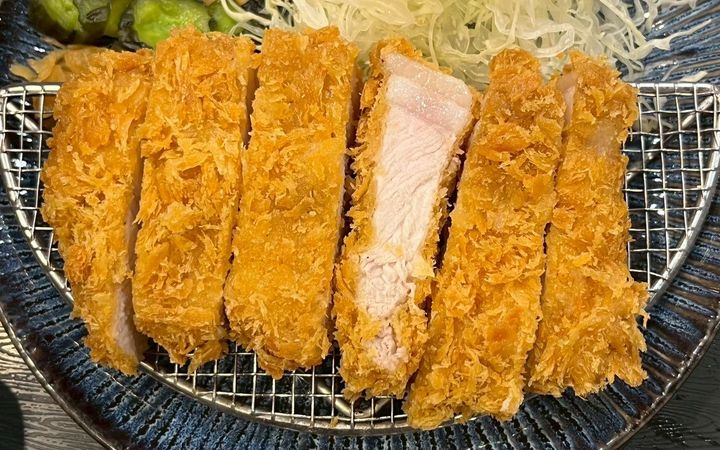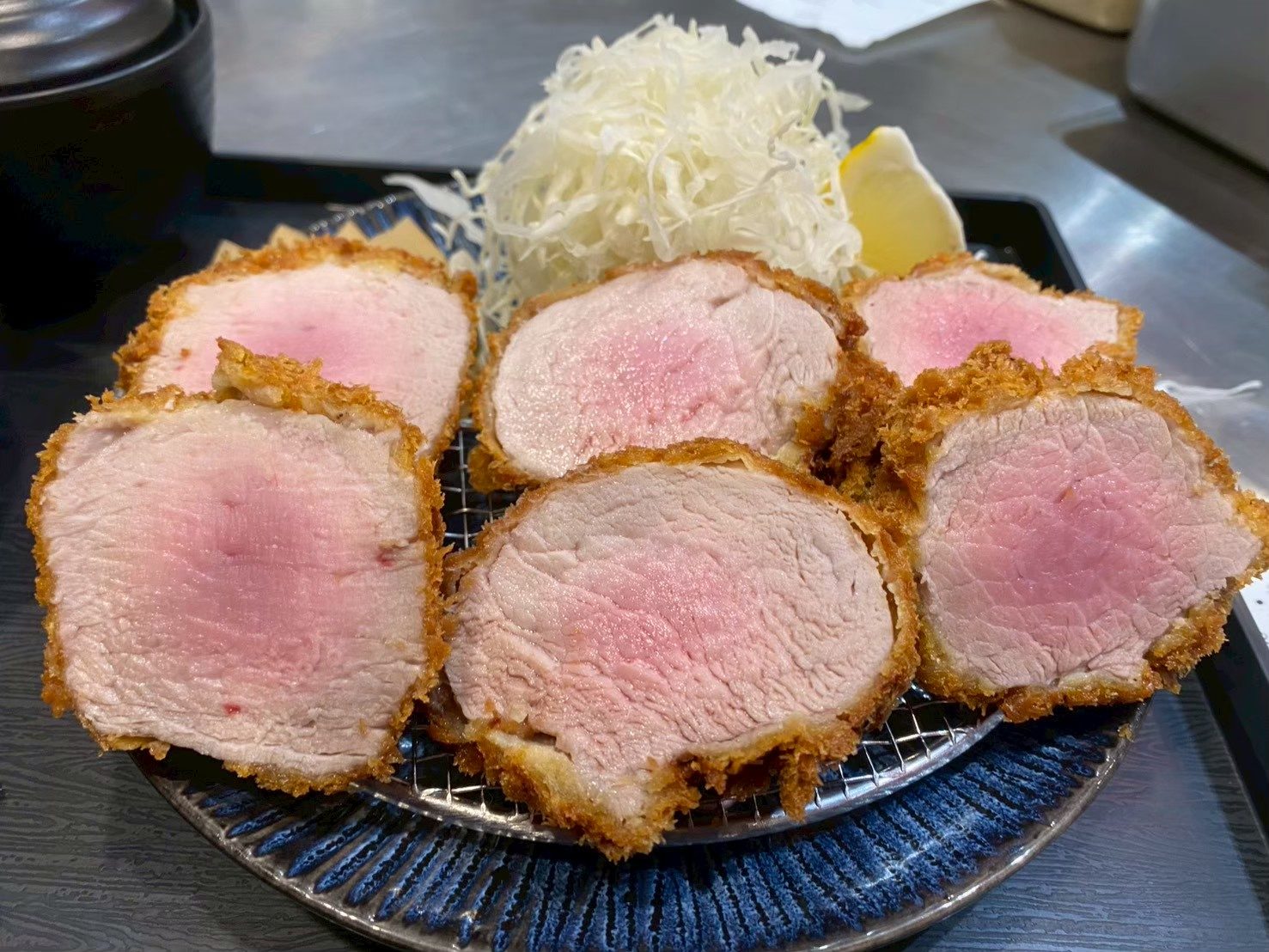
When I ran a tonkatsu restaurant in Bangkok, one question came up more than any other: is this pork cooked? Every cutlet we sliced was a soft pink in the middle, and in Thailand, where people grow up being warned about raw pork, that colour made some customers nervous.
It was cooked. The pink was not a mistake. It was the target, and hitting it is the hardest part of making tonkatsu.
What temperature is pork safe at?
In 2011 the United States Department of Agriculture lowered its recommended cooking temperature for whole cuts of pork to 145°F (63°C) at the core, followed by a three-minute rest before carving or eating. The old recommendation had been 160°F (71°C). The guidance applies to whole cuts; ground pork is a different case.
At around 63°C the proteins in the meat are only just setting, the muscle still holds much of its water, and the fat running through it has melted. The result is pork that is juicy and tender, with a centre that is still faintly pink. Past that point the meat keeps tightening and squeezing out water, which is how we end up with the dry, grey pork cutlet most of us grew up with, the kind that needs sauce to get it down.
The pink in a properly fried tonkatsu is not rawness. It is the goal.
Colour alone tells you very little, in either direction. The only reliable test is a thermometer pushed into the thickest part. If you are cooking at home without one, fry the pork until it is cooked through. Pork of unknown origin should not be served pink, and anyone who is pregnant, very young, elderly or immunocompromised should choose pork cooked all the way through.
The problem: two targets, two temperatures
A great tonkatsu needs two things at once: a core that stops at about 63°C, and a panko crust that is light, crisp and not soaked in oil. They want different kinds of heat. The inside wants heat that arrives gradually. The crust wants heat that is high and brief.
A pork loin cutlet 2 cm (¾ inch) thick needs about five minutes for heat to travel from the surface to the centre. Fry it at 180°C (355°F) from the start and the crust reaches its colour in about two and a half minutes, long before the centre is done. You are left with two bad options: lift it out raw in the middle, or keep frying until the crust burns.
The double fry, step by step
This is the method we used for every cutlet in the restaurant, and it is the one I teach.
- First fry, to cook the inside. Oil at 140°C (285°F), for 4 to 5 minutes. The crust stays pale. That is intended.
- First rest, about 3 minutes, standing upright. The heat stored under the surface keeps travelling inward on its own. This is carry-over cooking. Stand the cutlet on its edge rather than laying it flat, so the steam can rise and leave instead of condensing back into the crust.
- Second fry, for colour and crispness. Oil at 180°C (355°F), for 1 to 2 minutes, until golden. It happens fast, so do not look away.
- Second rest. Let the oil drain and let the core finish rising to 63°C (145°F). Then slice and serve at once.
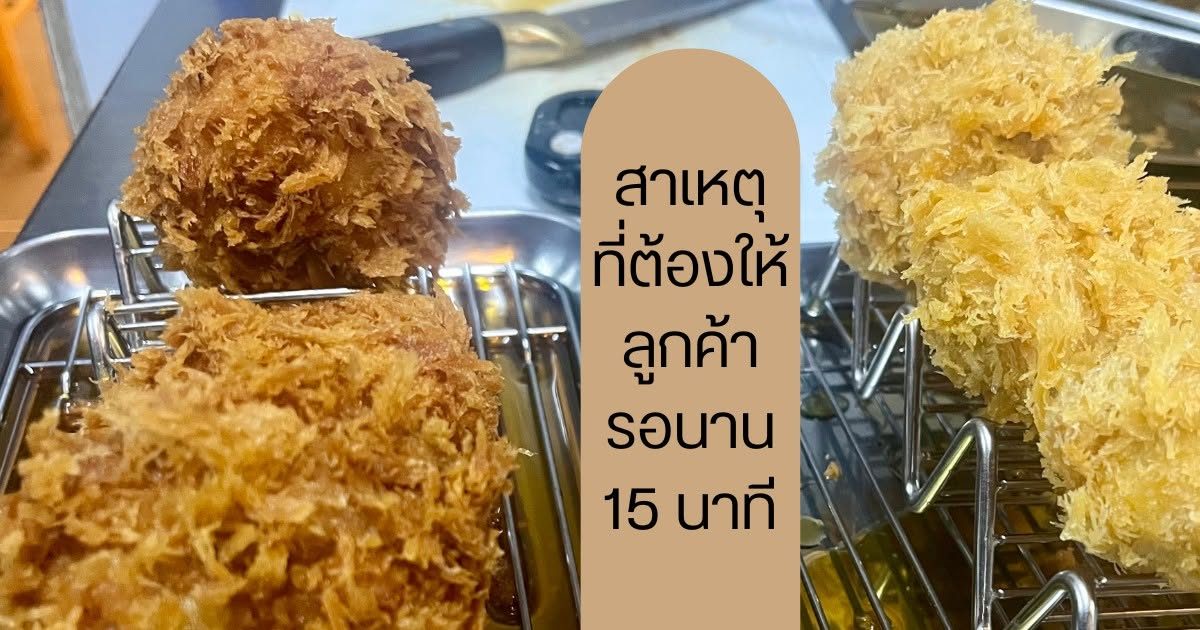
At the restaurant this meant about fifteen minutes from order to table, and roughly seven of those minutes were the pork simply resting. Customers could not see that part, and it mattered most.
Dry the pork first
Pat the pork dry before you coat it. As long as there is water on the surface, the surface cannot rise above 100°C, because the energy goes into turning water into steam. The Maillard reaction that browns the crust and gives it its aroma happens at roughly 140 to 165°C. Drying the meat does not only help the flour stick. It lets the crust start colouring sooner.
Listen to the pot
In the first minute of the first fry the oil roars, with big bubbles boiling up around the meat. By the fourth minute the sound has dropped to a whisper, the bubbles have shrunk, and the cutlet that sat on the bottom starts to float. That hiss is steam escaping from the pork. While there is water left to evaporate, the pot stays loud. A timer tells you how many minutes have passed. The sound tells you where this particular cutlet actually is.
The oil I fry in
My frying oil is a blend: 50 per cent rice bran oil, 48 per cent lard and 2 per cent dark toasted sesame oil. Rice bran oil handles heat well, with a smoke point around 232°C (450°F), but tastes of almost nothing. Lard gives aroma and a crispness no vegetable oil can match, but its smoke point is only around 190 to 200°C, so pure lard at 180°C is sitting just below its limit and breaks down within days. Half a pot of rice bran oil raises the tolerance of the whole pot. The 2 per cent of sesame looks too small to matter, until you leave it out.
Why no two cutlets are the same
The numbers above are a starting point, not a law. A difference of 2 to 3 mm in thickness changes the frying time. A cutlet straight from the fridge starts colder than one that has rested for five minutes. The oil cools every time a new piece goes in, and after twenty pieces you have to wait for it to recover. Good tonkatsu comes from reading all of this at once and adjusting in the moment.
One last thing that surprises people: even perfectly fried tonkatsu starts drying the moment it is sliced, because the exposed meat keeps losing moisture. Eat it as soon as it arrives. Take the photo quickly.
The frying method, the oil and the science behind every step are set out in full in chapter 24 of my book, The Tonkatsu Chronicles. The Thai edition is out now and the English translation is complete.

Ter, Thanakarn Techajirattakarn has run the tour company We Go Round Travel since 2009 and opened five restaurants in Bangkok, from a chef's table with a three to four month waiting list to a tonkatsu shop. He now teaches hands-on cooking classes and writes the Chronicles series of food books. Read my story